Market Commentary
October was another volatile month for global equity markets. The S&P 500 declined by 0.9%, while the tech-heavy Nasdaq Composite fell 5.3%. UK equities proved more resilient, with London’s FTSE 100 gaining 1.3%. European markets were weaker, with the Euro Stoxx 50 declining by 2.2%. Asian markets also came under significant pressure, with Japan’s Nikkei 225 and Hong Kong’s Hang Seng both falling 5.2%.
While some of these index level moves do not seem extreme (the S&P is trading near record highs), this disguises a significant amount of volatility below the surface. In fact, at mid-month, less than half of S&P 500 constituents were trading above their 200-day moving average, clearly indicating to what degree the market is being propped up by the mega-caps. Even some of these blue chips were not immune, though. Google declined 12% in a single session, erasing close to half a trillion dollars in market cap, while Intel dropped close to 30% following results, its worst day in more than 50 years. The Philadelphia Semiconductor index, a barometer for the AI trade (and the volatility that comes with it), declined by 13% over 8 sessions, its longest losing streak in 13 years. There were several factors contributing to this, with funding, future revenue generation and bubble concerns being the primary culprits.
Investor sentiment was further undermined by comments from Citadel’s Ken Griffin, who warned that we are “almost certainly in a bubble”, and Apollo’s Torsten Slok, who questioned the returns on AI investment, suggesting there has been “zero payoff” thus far. Against this backdrop, a basket of leading AI beneficiaries has surrendered all its gains from the first half of the year.
“AI Winners” Give Back Their Winnings
GS “AI Winners” Basket v. “AI At Risk” Basket (1 yr normalised return)
Source: GS global banking and markets, ZeroHedge (as of 10.15.26)
This volatility drove investors towards the relative safety of US Treasuries, which were offering some of their highest yields in two decades, with the 10-year yield peaking above 5.3%.
Commodity markets remained volatile. Brent crude rose a further 13.6% during the month, bringing its year-to-date gain to nearly 100%. Gold, meanwhile, fell another 6.8%, extending its six-month decline to 16%.
Rising oil prices contributed to higher-than-expected US CPI and PPI inflation readings. Nevertheless, the Fed voted 10–2 to hold rates steady ahead of the US midterm elections, making a December hike increasingly likely. Subsequent GDP data exceeded expectations, reinforcing confidence that the economy could withstand further tightening.
It was a busy month from a geopolitical standpoint, with France and Brazil the headliners. France experienced some of its most violent riots in years as spiralling debt caused by its bloated welfare systems starting to bite. (France has not managed to run a balanced budget since 1974.) In Brazil, an unexpected victory for left-leaning Lula da Silva shocked markets that were expecting fiscal reform. The country’s main index dropped 15% in a single session, while its currency weakened by around 8%. This serves as a cautionary tale for emerging markets where weak fiscal policy is the order of the day.
South Africa
The local JSE also delivered a negative return this month, declining by 0.4%. The month began on a bad note for consumers as petrol and diesel prices were both increased to record amounts. This will no doubt worsen the inflation outlook and contribute to potential SARB decisions going forward. In some good news, however, credit rating agency Moody’s had indicated that South Africa is on the right track for a rating upgrade, indicating stabilizing debt and pro-growth economic reforms. The month ended on a bad note, unfortunately, as the US government indicated that SA will be removed from the AGOA agreement from next year.
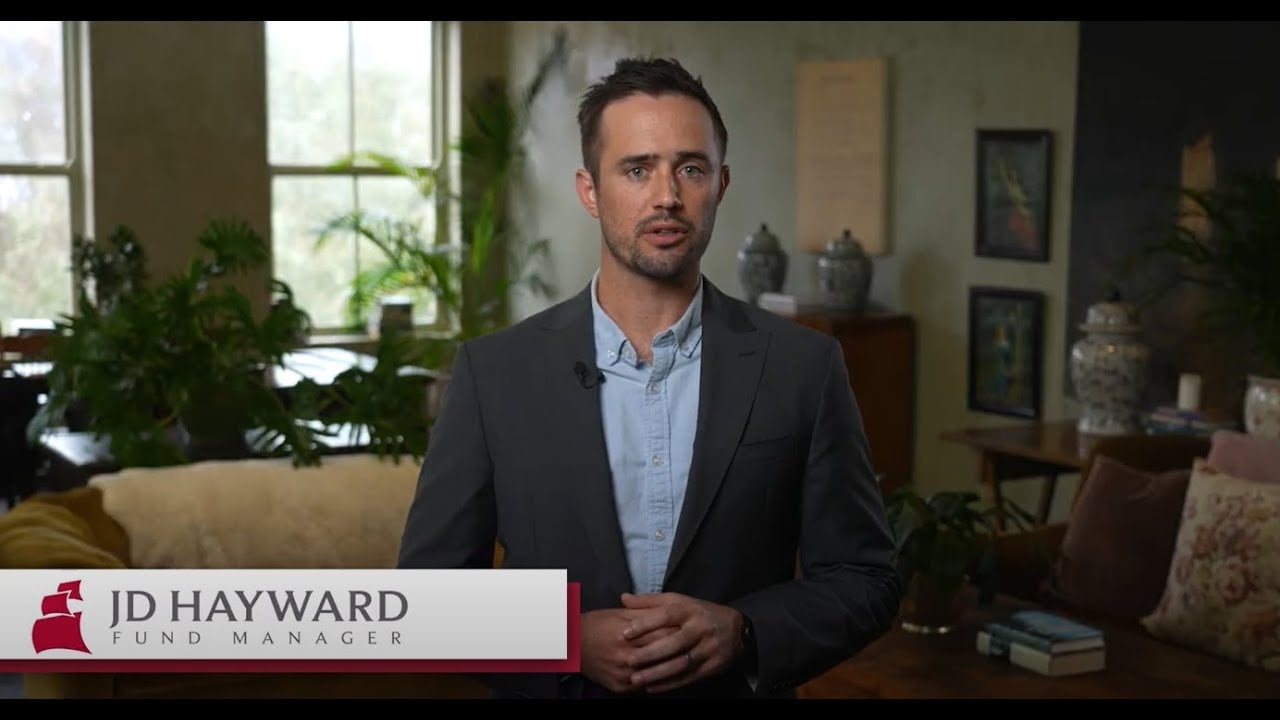
James Hayward BEng (Civil) CFA
James Hayward (JD) is a Fund Manager at Flagship, a specialist global asset manager, where he manages global investment strategies, with a particular focus on global equity research and portfolio construction. He joined Flagship in 2021 as an equity analyst and has played an integral role in developing and implementing the firm’s investment process.
Before entering investment management, James worked in engineering and the fintech start-up industries. During this period, he pursued further studies in investments. He developed a strong analytical foundation and problem-solving approach, which supported his move to Flagship in 2021 as an equity analyst.
James holds a Bachelor of Engineering degree in Civil Engineering from Stellenbosch University and is a CFA Charterholder.