April was another lesson on the importance of “staying invested” during bouts of volatility. After a steep selloff in March, markets roared back to life in April. In the US, the S&P 500 and Nasdaq surged 10.5% and 15.3% respectively, both recording their strongest month since 2020. For the Nasdaq, this included a 13-day winning streak, its longest in more than three decades. In the UK, the FTSE 100 gained 2.3%, while the Euro Stoxx 50 rose 5.6%. In the East, the Hang Seng closed 4.1% higher, while Japan’s Nikkei rose by an eye-watering 16.1%.
Looking at commodity prices, month-end figures smoothed a ton of volatility. Despite oil closing the month 3.7% lower at $114/barrel, it reached its highest level since 2022 yet also experienced the biggest daily drop since 2020 when news of a Middle East ceasefire broke.
The Fed kept rates steady, as expected, but notably, there were 4 dissenters, signalling a growing divide on the path forward for interest rates. Traders are currently not pricing in any further cuts for the year with inflation remaining top of mind. PCE, the Fed’s preferred inflation gauge, rose to 3.5% in March, while CPI came in at 3.3% (its highest level in 2 years), which is higher than the Feds’ target rate. Other economic indicators, however, are all looking positive: retail sales data remains robust; producer price index numbers came in below expectations; and US GDP growth came in at 2% over the first quarter, up from 0.5% in Q4 2025 (albeit slightly below estimates of 2.2%).
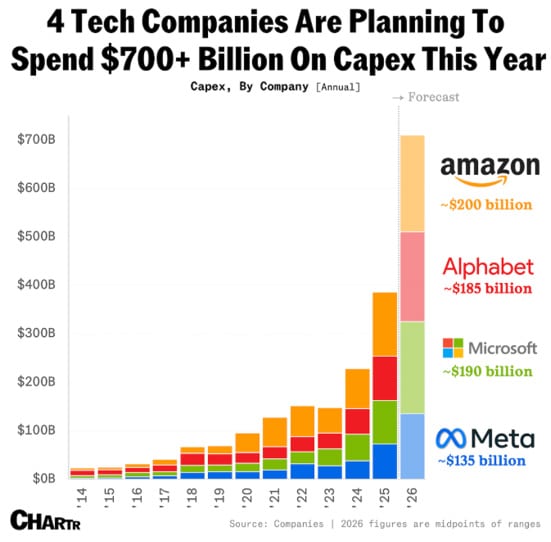
Notwithstanding the Middle East hostility, heightened market volatility, the prospect of soaring inflation and resultant rate hikes, markets are at all-time highs. This is largely driven by a resurgent AI trade and ever-increasing levels of capex being deployed by the ‘hyperscalers’. And these large amounts of money being invested are keeping markets happy…for now.
Geopolitically, the current status of the US and Israel’s war with Iran remains fluid, with “facts” changing by the hour. At the time of writing, a fragile ceasefire holds. Regardless of how quickly the situation is resolved, several energy experts have raised concerns that we are facing one of the biggest energy security threats in history, as the full effect is yet to filter through the supply chain. Is this the calm before the storm? What is certain, is that the war has changed the face of the energy landscape, possibly forever, as the UAE has decided to leave OPEC, the 12-nation oil cartel that accounts for half of global production. The UAE was the group’s 3rd biggest producer, and leaving means it does not have to abide by OPEC’s production quotas, freeing it up to increase output.
South Africa
The JSE had a green month, although more subdued than peers, with the index closing 1.6% higher.
In a blow to consumers and the SA growth story, the SARB struck a hawkish tone on their current rate outlook. Governor Kganyago pointed to a previous inflation shock (post the Russian invasion of Ukraine), noting that central banks who responded late ended up implementing more aggressive rate hikes. This follows two months of large increases in the prices of fuel, with diesel reaching record levels, which will no doubt stretch the consumer’s (already stretched) wallet. Kganyago also stated that policymakers remain committed to steering inflation back to the 3% target but also acknowledged that this process will take longer due to the economic shocks from the Iran war.
James Hayward BEng (Civil) CFA
Fund Manager
James (JD) is a fund manager of Flagship’s global funds, having joined in 2021 as an equity analyst. At the completion of his degree, JD worked in the engineering and fintech start-up industries while pursuing further studies in investments. JD holds an Engineering degree from Stellenbosch University and is a CFA charter holder.