US markets rallied for yet another strong month. The S&P 500 ended 5.3% higher, while the Nasdaq Composite gained 8.4%. The small-cap Russell 2000 was more subdued, rising by 4.4%. There was no such rally in London, as the FTSE 100 rose by a mere 0.7%. Europe was also strong, with the Euro Stoxx 50 gaining 2.9%. In the East, Hong Kong’s Hang Seng stands out as the lone decliner, ending 1.7% lower, while Japan’s Nikkei 225 was again the standout performer, ending the month 11.9% higher. The Nikkei is now up 32.8% year-to-date. There were also notable moves in the commodity market, as Brent crude declined by 19.3% during the month. Year-to-date, however, oil is still trading 51.3% higher.
Kevin Warsh was confirmed as the next chair of the Federal Reserve; no doubt, the market will analyse every word from his first meeting to assess the likely direction under his watch. It’s unlikely he’ll have much time to find his feet, as market data continues to serve a batch of mixed and volatile data – much of it heavily affected by the ongoing Middle East conflict.
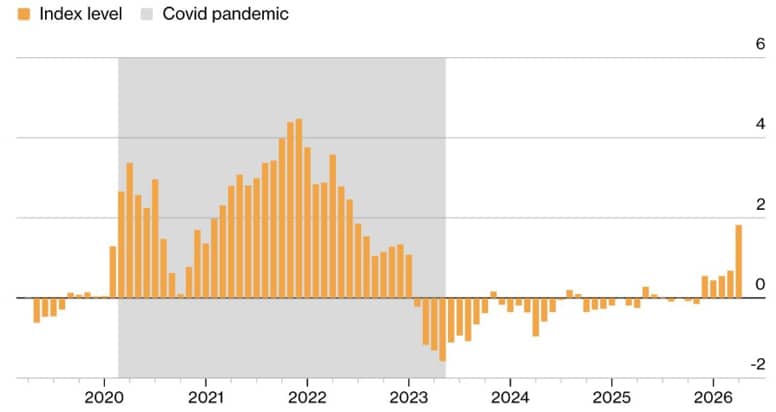
Supply chain stresses that hit peaks during COVID are again rearing their heads, after going quiet for the past three years…
Figure 1: Global Supply Chain Pressure Jump in April. The New York Fed’s index hit the highest since July 2022.
Source: New York Fed
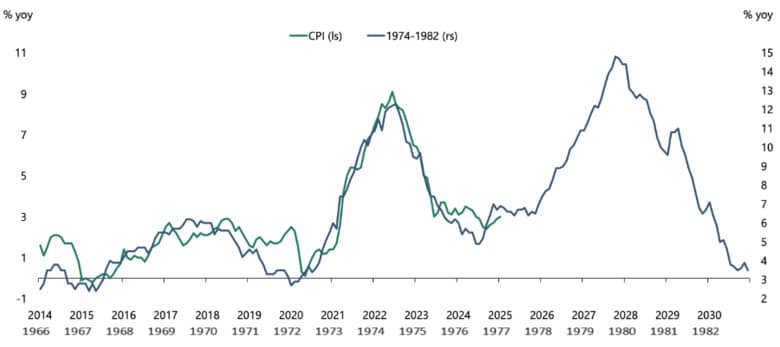
Spiking energy prices have led to the US CPI coming in at the highest levels since 2023. More concerning, though, is Core CPI (excluding energy and food prices), which was meaningfully higher than estimates, as higher energy prices are now filtering through to other parts of the economy. The parallels between inflation today and inflation caused by the energy crisis in the 1970s are now starting to look concerningly eerie…
Figure 2: Comparing inflation today with the 1970s
Source: Bloomberg
These inflationary pressures have resulted in a global bond selloff as markets start to anticipate the probability of sustained higher inflation, which will force central banks to raise borrowing rates. US 30-year treasury yields reached their highest level since 2007, on concerns about inflation and the outlook for the US fiscus. The US market is now pricing in a 50% probability that the Fed will raise rates this year.
Higher inflation numbers are not limited to the US. In Japan, producer prices (PPI) surged in April by the most in 12 years, boosting inflationary pressures and supporting the case for the Bank of Japan to raise interest rates. Japan’s 10-year yields jumped to levels last seen in 1996, while the nation’s 30-year yield surged to the highest level since its 1999 debut.
Relatively speaking, geopolitical news was subdued this month. Trump’s previously postponed meeting with Xi Jinping took place in Beijing and, apart from statements about freeing up the Strait of Hormuz, the meeting delivered surprisingly little.
South Africa
Domestically, the JSE All Share index missed out on the strong equity rally, declining by 0.3% for the month.
In bad news for local consumers, in April, inflation raced to 4.0% from 3.1% in March, year-on-year, driven by large jumps in energy prices brought on by the ongoing Middle East conflict. This now puts it well beyond the SARB’s target of 3%, which led to the first rate increase since 2023. The SARB hinted that there might be more to come as they raised their inflation projection for 2026 to 4.4%. Producer inflation also spiked to a record in April, indicating further interest pain around the corner.
A welcome silver lining, though, was SA debt receiving its first credit upgrade from Moody’s since 2007. While we are still two levels below investment grade, it’s undoubtedly a small step in the right direction.
James Hayward BEng (Civil) CFA
Fund Manager
James (JD) is a fund manager of Flagship’s global funds, having joined in 2021 as an equity analyst. At the completion of his degree, JD worked in the engineering and fintech start-up industries while pursuing further studies in investments. JD holds an Engineering degree from Stellenbosch University and is a CFA charter holder.